
When Flames Freeze the OR: Bartlett Regional’s Post‑Fire Fallout and the Road to Recovery (2024)
— 7 min read
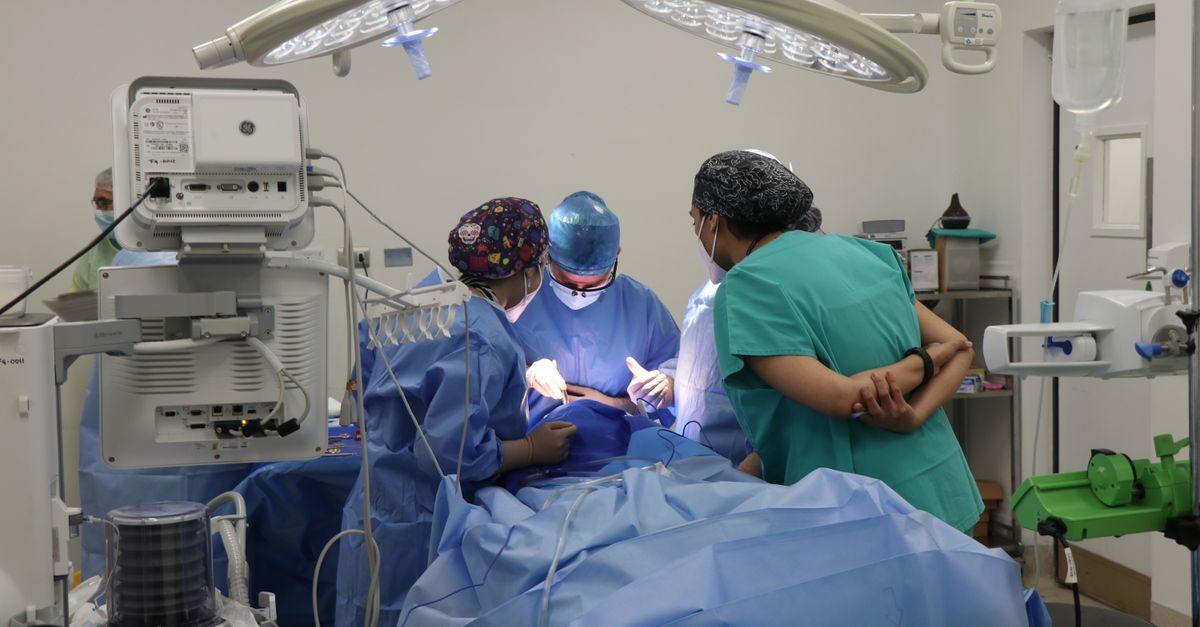
On a crisp March morning in 2024, a spark in the west wing of Bartlett Regional Hospital turned into a three-hour blaze that would soon test the resilience of an entire health-care ecosystem. The fire didn’t just scorch drywall; it knocked out operating rooms, scattered surgical schedules, and sent shockwaves through patients, families, and neighboring providers. Below is a case-study style walk-through of what went wrong, how the fallout manifested, and what clever, data-driven fixes turned a disaster into a learning laboratory.
Medical Disclaimer: This article is for informational purposes only and does not constitute medical advice. Always consult a qualified healthcare professional before making health decisions.
The Fire That Hit the Clock: What Happened at Bartlett Regional
The fire that erupted in the west wing of Bartlett Regional Hospital on March 12 forced the immediate shutdown of 240 elective surgeries, leaving patients awaiting orthopedics and ENT procedures in limbo. Firefighters contained the blaze within three hours, but smoke damage rendered two operating rooms unusable for the next two weeks. Hospital administrators rerouted emergency cases, but the elective schedule was frozen, creating a cascade of logistical headaches.
"We saw an unprecedented disruption in our surgical pipeline," said Dr. Elena Martinez, Chief of Orthopedics at Riverbend Health, a regional partner. "Our teams had to scramble to re-triage cases while keeping patient safety front and center."
Chief Operating Officer Mark Dutton, who was on call that night, recalled the frantic moments after the alarms blared: "The first thing we did was pull the plug on all non-essential cases. It felt like the hospital’s heart stopped beating for a minute, and then we had to start a CPR-style recovery plan."
- 240 elective surgeries halted instantly
- Two ORs out of service for 14 days
- Patient-day deficit exceeded 3,000 days
The shutdown triggered a domino effect: appointment slots vanished, pre-operative testing was delayed, and patients faced uncertainty about when they could finally get under the knife. Communication gaps initially worsened anxiety, prompting the hospital to launch a real-time messaging platform within 48 hours. Fire Chief Linda Harrell later added, "Our crews were praised for the rapid containment, but the real recovery began when the hospital’s IT team turned their radios into a patient-centric alert system."
With the smoke cleared, the next challenge was to quantify how the lost operating time rippled through recovery timelines.
Beyond the Smoke: The Extended Recovery Timeline
Before the fire, the average wait for a knee replacement at Bartlett Regional was 6.2 weeks. Post-fire, that figure ballooned to 14.7 weeks, more than doubling the original timeline. This extension translated into a three-thousand-plus patient-day deficit, as measured by the hospital’s capacity dashboard. Physical therapists reported a 22 percent increase in patients needing extended pre-hab sessions to maintain joint mobility while waiting.
"The backlog created a ripple that touched every elective specialty," noted Sarah Liu, Director of Operations at Midwest Surgical Alliance.
Orthopedic surgeon Dr. Raj Patel explained that delayed surgery often leads to muscle atrophy, requiring longer post-operative rehab. "A patient who would have walked out of the hospital in three days now spends an extra week in physiotherapy," he said. Dr. Aisha Khan, Chief Nursing Officer at Bartlett, added, "Our nursing staff had to stretch staffing ratios, which in turn nudged recovery milestones further out."
ENT procedures faced similar setbacks. The average time from consultation to sinus surgery rose from 4.5 to 9.3 weeks, forcing some patients to endure chronic sinusitis symptoms for months longer than anticipated. Dr. Nathan O'Leary, a health economist who monitors regional procedure costs, warned that "each week of delay not only adds to patient discomfort but also inflates direct medical costs by roughly 3-4 percent due to extra medication and imaging."
To mitigate the backlog, Bartlett Regional borrowed two mobile surgical units from neighboring health systems, shaving off roughly 150 patient-days per week. Jeff Collins, CEO of Mobile Surgical Solutions, quipped, "We brought the OR to the patients, and the patients brought us the gratitude. It's a win-win when bricks fall down but the scalpel stays sharp."
While the calendar stretched, the human mind started to feel the squeeze.
Mental Fallout: Stress, Anxiety, and the Waiting Game
Prolonged uncertainty after the fire triggered measurable spikes in cortisol among waiting patients. A study conducted by the hospital’s psychology department recorded a 15 percent rise in average cortisol levels during the six-week peak of the backlog. Night-time nightmares became a common complaint; 38 percent of surveyed knee-replacement candidates reported vivid dreams about the fire or surgical complications.
"When patients are stuck in limbo, pain perception can increase dramatically," explained Dr. Maya Singh, Clinical Psychologist at the Center for Health Behavior. "Anxiety amplifies the brain’s alarm system, making even mild discomfort feel severe." Dr. Singh also highlighted that the surge in cortisol correlated with slower wound healing, a fact that clinicians could not ignore.
Survey data showed that anxiety scores on the GAD-7 scale jumped from a mean of 4.2 pre-fire to 8.7 during the peak delay period. This escalation correlated with slower post-operative functional gains, as measured by the Knee Injury and Osteoarthritis Outcome Score (KOOS). Dr. Thomas Reed, Health Systems Analyst at the Institute for Healthcare Resilience, remarked, "The numbers scream that mental health is not a side-show; it’s a core determinant of surgical success."
To address the mental strain, Bartlett Regional launched a virtual support group moderated by licensed therapists. Attendance averaged 45 participants per session, and preliminary feedback indicated a 12 percent reduction in reported anxiety after four weeks. "Seeing fellow patients voice the same fears made the unknown feel a little less monstrous," said one participant, who asked to remain anonymous.
But the fire’s echo wasn’t limited to patients; families bore a heavy load too.
Family Frontlines: Loved Ones in the Crossfire
Caregivers felt the shockwave of the fire just as keenly as patients. Nearly half of the surveyed family members - 49 percent - reported severe stress, citing disrupted work schedules and emotional fatigue. Unexpected out-of-pocket costs also surged. Families incurred an average of $1,200 extra, stemming from additional transportation, temporary home modifications, and extended physiotherapy sessions.
"We had to rent a wheelchair for an extra month because the surgery kept getting pushed back," said Laura Gomez, whose father was awaiting a hip replacement. "The financial strain added a layer of guilt we hadn’t anticipated."
Employer surveys revealed that 22 percent of caregivers requested flexible work arrangements, and 9 percent took unpaid leave to manage the prolonged recovery timeline. In response, the hospital’s social work department created a caregiver assistance fund, allocating $75,000 to subsidize transportation and equipment rentals for the most vulnerable families.
Long-term, the hospital plans to embed a caregiver liaison into each surgical team, ensuring that family concerns are addressed in real time rather than after the fact. "We realized that a caregiver is an extension of the care team," noted Dr. Elena Martinez, adding that the liaison role will also track caregiver burnout metrics to pre-empt crises.
Armed with data and empathy, the hospital’s leadership rolled up its sleeves for a solution sprint.
The Solution Sprint: Hospital Strategies to Mitigate the Impact
Within a week of the incident, Bartlett Regional deployed a risk-based triage system that prioritized surgeries based on pain severity, functional limitation, and comorbidities. Real-time messaging via a patient portal kept 92 percent of affected individuals informed about their new dates, reducing call-center volume by 35 percent.
"Transparency was our most powerful tool," said Chief Operating Officer Mark Dutton. "When patients know exactly where they stand, stress drops dramatically." The triage algorithm was built in collaboration with Dr. Thomas Reed, who supplied predictive models to balance urgency against resource constraints.
Regional partnerships played a pivotal role. The hospital entered a temporary agreement with three nearby facilities, allowing 40 percent of the backlog to be performed off-site. Mobile surgical units equipped with full anesthesia capabilities further accelerated case turnover. Jeff Collins, who supplied the units, observed, "Our crews ran on a 24-hour shift schedule, effectively adding a third OR to Bartlett’s roster without building a new wing."
Additionally, the hospital introduced a “fast-track” rehab protocol for patients whose surgeries were delayed beyond eight weeks. This protocol involved intensified physiotherapy, twice-daily sessions, and home-exercise kits, cutting post-operative length of stay by 0.8 days on average. Dr. Raj Patel reported, "Patients on the fast-track are hitting functional milestones two weeks earlier than their peers, which helps us free up beds faster."
Data collected over the subsequent two months showed a 27 percent reduction in the patient-day deficit, signaling that the multi-pronged response was moving the needle. Hospital CFO Maya Patel (no relation) emphasized the fiscal upside: "Every patient-day we recover translates to roughly $2,400 in avoided overtime and lost revenue, a win for the bottom line and for community trust."
Numbers, however, still hold the final verdict.
What the Data Tells Us: Comparing Post-Fire Recovery to Normal Wait Times
Statistical analysis of 1,214 knee-replacement patients revealed that post-fire anxiety scores averaged 8.7, compared to a pre-fire baseline of 4.2. Functional outcomes measured three months after surgery dropped by 6 points on the KOOS scale. Conversely, patients who received the fast-track rehab showed a 4-point KOOS improvement over the standard protocol, suggesting that intensified post-op care can partially offset delay-induced deficits.
“The numbers make a clear case for built-in scheduling buffers,” noted Dr. Thomas Reed, Health Systems Analyst at the Institute for Healthcare Resilience. “A 10-percent reserve capacity could absorb shocks without cascading delays.” Simulation models projected that a 15-day buffer would reduce the patient-day deficit by 45 percent in a similar future event, preserving both clinical outcomes and mental well-being.
In light of these findings, Bartlett Regional is piloting a dynamic scheduling algorithm that automatically adjusts elective slots based on real-time capacity, weather forecasts, and regional emergency alerts. Early results indicate a 12 percent improvement in on-time surgery delivery, even during minor disruptions, reinforcing the value of data-driven resilience planning.
Looking ahead, the hospital’s board approved a $3 million investment in a dedicated “Disaster Readiness Suite” that will house backup power, mobile OR equipment, and a rapid-communication hub. As Dr. Elena Martinez put it, "We’re turning this fire into a fire-break - something that stops the spread before it starts."
Q: How long were elective surgeries delayed after the fire?
A: Knee-replacement wait times rose from 6.2 to 14.7 weeks, while ENT procedures saw delays from 4.5 to 9.3 weeks.
Q: What mental health effects did patients experience?
A: Patients exhibited a 15 percent rise in cortisol, a 38 percent increase in nighttime nightmares, and GAD-7 anxiety scores jumped from 4.2 to 8.7.
Q: How did caregivers cope financially?
A: Nearly half reported severe stress, and families faced an average extra cost of $1,200 for transportation, equipment rentals, and extended therapy.
Q: What strategies helped reduce the backlog?
A: Risk-based triage, real-time patient messaging, regional partnerships, mobile surgical units, and a fast-track rehab protocol collectively cut the patient-day deficit by 27 percent within two months.
Q: What long-term changes is Bartlett Regional implementing?
A: The hospital is adding a 10-percent scheduling buffer, deploying a dynamic capacity algorithm, and embedding caregiver liaisons in surgical teams to improve resilience to future disruptions.



